

How Long Does a Cat Rabies Vaccine Last? A Guide for Cat Owners
A cat rabies vaccine lasts either one year or three years, depending on the specific vaccine product your veterinarian uses and your cat’s vaccination history. Kittens receive their first rabies shot at around 12 to 16 weeks of age, followed by a booster one year later, and then boosters every one to three years for life. If you’ve ever wondered how long a cat rabies vaccine last, the honest answer is that it depends on a few key factors, and your veterinarian can tell you exactly when your cat’s protection expires.
At Pewaukee Veterinary Service, we help cat owners throughout Pewaukee and the Lake Country area stay on top of rabies protection with a schedule that fits each cat’s lifestyle. This article explains how often cats need rabies shots, why indoor cats still benefit from vaccination, what side effects to watch for, and how the full vaccine schedule works from kittenhood onward.
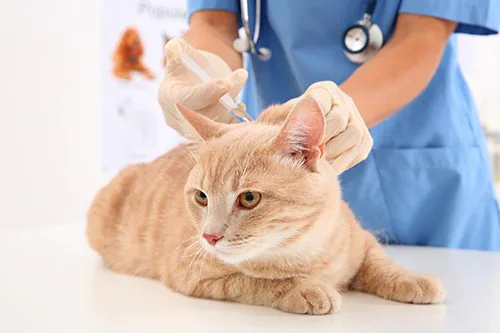
How Often Do Cats Need Rabies Shots?
The frequency of rabies boosters comes down to which vaccine your cat receives. Veterinarians use rabies vaccines licensed for either a one-year or a three-year duration, and both types provide strong protection when given on schedule.
One-Year vs. Three-Year Rabies Vaccines
One-year vaccines require a booster every 12 months to keep your cat protected. Three-year vaccines allow a longer gap between boosters once your cat has completed the initial series. Your veterinarian chooses the right product based on your cat’s age, health, vaccination history, and lifestyle. So when someone asks how long a cat rabies vaccine last, the most accurate answer is to check the vaccine certificate, which lists the product type and the date the next dose is due.
Why the First Booster Matters
Even when a veterinarian uses a three-year product, a cat’s very first rabies shot only counts for one year. The booster given 12 months later is what qualifies your cat for the longer interval. Here are a few situations that commonly reset or shorten the timeline:
- Your cat misses a booster and falls outside the vaccine’s coverage window
- Your cat’s vaccination records from a previous clinic or shelter are unavailable
- Your cat receives a one-year product due to age, health, or availability
- You adopt an adult cat with an unknown vaccine history
In any of these cases, your veterinarian may recommend restarting with a one-year dose. Understanding your cat’s rabies vaccination helps you avoid accidental gaps in protection, which can carry serious health and legal consequences.
Do Cats Need Rabies Shots, Even If They Live Indoors?
Yes, veterinarians recommend rabies vaccination for all cats, including those who never leave the house. Rabies is almost always fatal once symptoms appear, and there is no cure, which makes prevention the only reliable defense.
How Indoor Cats Can Be Exposed
Many owners assume an indoor lifestyle removes all risk, but exposure can happen in surprising ways. Bats are one of the most common sources of rabies in the Midwest, and they can slip into homes through attics, chimneys, and small gaps around windows. Curious cats often chase and catch bats before their owners even notice. Indoor cats also sometimes dart through an open door or escape during a move, a storm, or a visit from guests. A single encounter with an infected animal can put your cat and your family at risk.
Protection for Your Household and Community
Rabies is a zoonotic disease, meaning it can spread from animals to people. Vaccinating your cat creates a protective barrier between wildlife and your family. Vaccination also matters if your cat ever bites or scratches someone. An unvaccinated cat involved in a bite may face a lengthy quarantine or other public health requirements, while a cat with current vaccine records typically faces a simpler process. Rabies rules vary by community in Wisconsin, so the team at Pewaukee Veterinary Service can help you understand what applies to your cat and keep your records up to date.
How Many Rabies Shots Do Cats Need, and What Is the Vaccine Schedule?
Most cats need one initial rabies shot as a kitten, one booster a year later, and ongoing boosters for the rest of their lives. The exact timing depends on the vaccine product and your cat’s age when they start.
The Kitten Rabies Schedule
Kittens typically receive their first rabies vaccine between 12 and 16 weeks of age, often during one of their final kitten visits. Some products are labeled for slightly younger kittens, and your veterinarian will choose the appropriate timing. That first dose provides one year of protection. The second rabies shot comes about 12 months later, usually around your cat’s first birthday wellness exam.
Adult Cat Boosters and Catch-Up Plans
After the first-year booster, your cat moves onto a one-year or three-year cycle based on the product used. Adult cats adopted with no known history generally start with a single dose, then follow the same pattern as kittens. A typical rabies timeline for a cat looks like this:
- 12 to 16 weeks: First rabies vaccine, valid for one year
- About one year later: First booster, which may qualify for a three-year interval
- Every one or three years after that: Ongoing boosters based on the vaccine type
- Senior years: Continued boosters, with timing reviewed during wellness exams
Your veterinarian may adjust this schedule for cats with chronic illnesses or a history of vaccine reactions. Pairing rabies boosters with annual or twice-yearly wellness exams makes it easy to stay current.
What Are the Side Effects of the Cat Rabies Vaccine?
Most cats tolerate the rabies vaccine very well and experience mild side effects or none at all. Knowing what to expect helps you tell the difference between a normal response and a reason to call your veterinarian.
Common, Mild Reactions
Some cats feel a little off for a day or two after vaccination. You might notice mild sleepiness, a slightly reduced appetite, or tenderness where the injection was given. A small, firm bump under the skin at the injection site can also appear and usually fades over a few weeks. These responses show that the immune system is doing its job and building protection.
Less Common Reactions That Need Veterinary Care
Serious reactions are rare, but they can happen, and prompt attention matters. Contact your veterinarian right away if you notice any of the following after your cat’s rabies shot:
- Facial swelling, hives, or itchy, red skin
- Repeated vomiting or diarrhea
- Difficulty breathing or sudden collapse
- Lethargy that lasts longer than a day or two
- A lump at the injection site that keeps growing or lingers for several months
A persistent or enlarging lump deserves a veterinary exam, since rarely these can develop into a more serious type of growth. If your cat has reacted to a vaccine before, let your veterinary team know so they can plan accordingly for future boosters.
Staying on Schedule With Pewaukee Veterinary Service
Rabies protection is one of the simplest and most important steps you can take for your cat’s health. Whether your cat is a brand-new kitten, a newly adopted adult, or a senior who has been with you for years, a consistent booster schedule keeps that protection in place.
At Pewaukee Veterinary Service, our team reviews every cat’s vaccine history during wellness visits and recommends a rabies schedule tailored to their age, health, and lifestyle. We’re happy to answer questions about vaccine options, side effects, or catching up on missed boosters. If you still have questions about your cat’s rabies vaccine, we can look up their records and give you an exact date. To schedule your cat’s rabies vaccine or check when their next booster is due, call us at (262) 347-0787.
Share This Post
Recent Posts

Warning Signs After Dog Neutering: What Pet Owners Should Watch For
The most common warning signs after dog neutering include worsening redness or swelling at the incision, discharge…
Can an X-Ray Show a Torn ACL in a Dog?
When your dog starts limping or refusing to put weight on a back leg, it’s hard not…
Dog CT Scan Cost
When your dog needs advanced diagnostic testing, it’s natural to want clear information—especially when it comes to…
Short White Worms in Dog Poop
Finding short white worms in dog poop can be an unsettling experience for any pet owner. It’s…

Dog Throwing Up White Foam: What to Do
When your dog starts throwing up white foam, it’s natural to feel alarmed and uncertain about what…
Recent Posts
Since 1977, Pewaukee Veterinary Services has provided progressive veterinary medicine to pets of Pewaukee and the greater Milwaukee area. We put a strong emphasis on preventive medicine and alternative therapies aimed at keeping companion animals healthy and happy. Yet, if your pet is ill, there’s no better place to entrust their care. Our animal hospital in Pewaukee not only has the most advanced veterinary equipment in the area, but also the skilled veterinarians and staff to use it.